

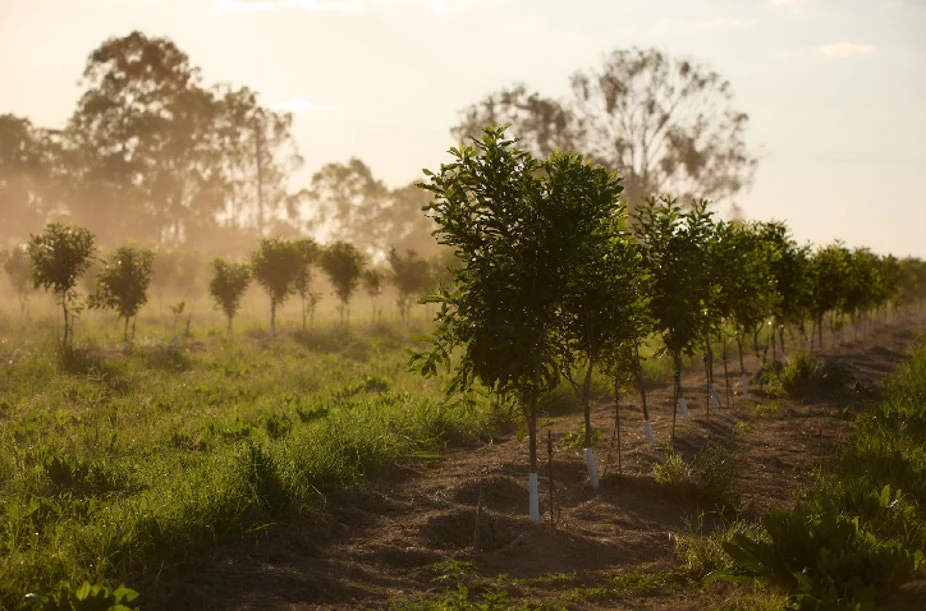
Young macadamia trees in a misty orchard at Norbrook Farm, Queensland

RAIZ · Case Study · Australia

Australia’s investments into landscape repair through the Climate-Smart Agriculture Program

Location
Varying locations across Australia
Stage of implementation
In progress
Lead entity
Australian Department of Agriculture, Fisheries and Forestry

Key figures

Australian Government - Department of Agriculture, Fisheries and Forestry
Climate-Smart Agriculture ProgramFunded 2023–24 to 2027–28
A$302.1M
Hectares with practice changeAs of July 2026
360,000+
Engagement events deliveredFarmer workshops, trials and demonstrations
~1,200
Days of on-ground innovationHands-on sustainable agriculture activity
~1,800
Soil tests conductedTracking soil health over time
1,500+
Sustainable Agriculture FacilitatorsExtension officers across Australia
70+

Mapping the problem

Australia’s agriculture sector plays a central role as stewards of the land and natural resources, with farming activities spanning over 50% of Australia’s land use (439 million hectares). At a national scale, the sustainable management and restoration of agricultural land is essential and underpins Australia’s food security, biodiversity, climate resilience and long-term economic prosperity.

Australian farmers are widely adopting natural resource management practices, with over 90% reporting the use of at least one practice such as soil conservation, ground cover retention, efficient water use and protection of native vegetation. However, pressures on land condition across the country persist.

Climate change is intensifying existing pressures on Australia’s agricultural landscapes. Farmers and regional communities are already experiencing the effects through changes in productivity, water availability, soil health, and the spread of pests, weeds and diseases.

ABARES indicates that future changes in climate could make for tougher conditions across all farms around Australia, including through more frequent droughts, extreme weather events and shifting rainfall patterns. While productivity gains and adaptive practices have helped offset some of these impacts to date, the long-term sustainability of the sector depends on maintaining and improving the condition of natural capital.

50%+

of Australia’s land use is farming - 439 million hectares

90%+

of farmers report using at least one natural resource management practice

18%

reduction in average annual broadacre farm profits, 2001–2023 vs 1951–2000 - around A$28,500 per farm (ABARES)

Pressures on Australia’s soils and agricultural landscapes

  • Erosion
  • Acidification
  • Salinisation
  • Sodification
  • Soil carbon loss
  • Contamination
  • Urban and industrial expansion

The solution and approach

A$1.1B

Natural Heritage Trust (NHT)

A$302.1MCSAP

Natural Heritage Trust (NHT)

The Australian Government’s key investment platform for natural resource management, sustainable agriculture and environmental protection outcomes, governed by the Natural Heritage Trust of Australia Act 1997. Each phase is typically funded over a 5-year cycle; the current phase runs 2023–24 to 2027–28.

Climate-Smart Agriculture Program (CSAP)

Established under the NHT for 2023–24 to 2027–28, continuing the enduring investment into sustainable agriculture and natural resource management - supporting the sector, regional organisations and thriving grassroots communities.

Farmers are supported to drive growth of agricultural productivity, while also adopting sustainable natural resource management practices that protect and conserve natural capital and biodiversity.

The program’s design was informed by a co-design process with key stakeholders and experts in the agriculture sector in early 2023. The department sought feedback on priorities for investment, the types of projects the NHT could invest in, and how to enhance engagement and collaboration with First Nations people. Alignment with Australia’s Nationally Determined Contribution (NDC) and broader climate policies - including emissions reduction, carbon sequestration and land management - was also considered.

Through targeted investment, the program is driving real change on the ground by building capability, strengthening knowledge and accelerating the adoption of sustainable practices across agriculture. Extension activities are a priority: hands-on trials and on-farm demonstrations enable farmers to test, apply and scale approaches that address local and national priorities and deliver lasting improvements in sustainability outcomes.

Delivered through partnerships

  • Regional natural resource management (NRM) organisations
  • Industry
  • Research organisations and academia
  • State and territory governments
  • Non-government organisations
  • First Nations organisations
  • Landcare and community groups

Project priorities

  • Climate adaptation and emissions reduction
  • Education and extension
  • Practice change
  • Innovative technology
  • Precision irrigation
  • Fertiliser efficiency
  • Revegetation and landscape repair
  • Soil health
  • Markets and natural capital
  • First Nations culture and knowledge
  • Water management
  • Integrated pest and disease management

The CSAP Monitoring, Evaluation and Learning Framework focuses on understanding the impact of the program, including what works, why it works, and who benefits from it. This approach embeds an evaluative culture that values ongoing learning and improvement, and enables aggregation and national-scale assessment of program performance.

The CSAP also funds a network of over 70 Sustainable Agriculture Facilitators (SAFs) across Australia who connect farmers, landholders, community groups and agriculture industries to relevant information and programs on climate-smart, sustainable agriculture practices; facilitate partnerships and connections; and support the delivery of sustainable agriculture projects in their region.

Programme timeline

  1. 1997

    Natural Heritage Trust Act

    The Natural Heritage Trust of Australia Act 1997 establishes the enduring investment platform.

  2. Early 2023

    Co-design with the sector

    Stakeholders and experts shape investment priorities, project types and First Nations engagement.

  3. 2023–24

    CSAP begins

    The A$302.1 million Climate-Smart Agriculture Program starts within the current NHT phase.

  4. 2025

    Grants Round 2 and new co-investment

    Capacity Building Grants Round 2 launches; Mercuri VC co-invests in Norbrook Farm.

  5. July 2026

    360,000+ hectares

    Practice change delivered, with ~1,200 engagement events and 1,500+ soil tests.

  6. 2027–28

    Current phase ends

    Reviews of outcomes, lessons learnt and future opportunities inform what comes next.

Results so far · As of July 2026

Together, these efforts demonstrate a coordinated approach to improving land management, building capacity, and driving sustainable agricultural and environmental outcomes at scale.

Financing structure

A total of A$302.1 million of government funding has been allocated to support climate-smart, sustainable agriculture. The program is delivered primarily through grant-based and procurement mechanisms:

  1. Competitive and targeted grants for projects supporting climate-smart practice adoption, innovation and capacity building

  2. Procurement arrangements with Regional Delivery Partners to deliver local and regional projects

  3. Targeted funding to research and delivery organisations (e.g. CSIRO, industry bodies, NRM organisations)

70%

of program investment contributed in-kind

There is significant co-investment across all major sub-programs, from state and territory government, philanthropic, research and private partners. For the Capacity Building Grants Round 2 sub-program, launched in 2025, successful grantees reported over A$11.5 million in in-kind co-contributions - 70% of program investment.

Knowledge sharing and potential for replication

The program is still underway but appropriate reviews are taking place. These reviews will cover program outcomes, lessons learnt and future opportunities. Continuous improvement is a core tenet of the program, which has been running (in current form) since the late-1990s and has influenced several other programs.

The program has a strong, built-in knowledge sharing capacity through the Sustainable Agriculture Facilitators (SAF) sub-program. The investment funds extension officers who share knowledge and support farmers, industry and community groups (including Landcare Groups) to adopt new and innovative sustainable agriculture practices.

Farmers themselves see the SAFs as one of the most useful and effective components of the program.

Supportive material

Case study 1 · Procurement

Climate Smart Catchments

Provider
Burnett Mary Regional Group (BMRG)
Investment
A$1.3 million

Through this project, BMRG is helping landholders take practical steps to enhance the health and productivity of their land. This includes:

  • Planting multi-species cover crops to increase soil carbon and fertility
  • Restoring bushland and wildlife corridors to improve biodiversity
  • Supporting on-farm water retention and erosion control
  • Measuring and monitoring key natural capital indicators
  • Helping landholders access future carbon and biodiversity markets

This approach is not about locking land away. It’s about working with farmers, Traditional Owners, and natural systems to ensure productive land also supports environmental resilience.

Project targets include implementing engagement events, fence installations, fauna and habitat surveys, improving sustainable agriculture practices over large areas, removing weeds, conducting soil tests and many other activities.

The Climate Smart Catchments project aims to

  • Strengthen climate resilience across agricultural landscapes
  • Support new revenue streams through nature-based solutions
  • Create long-term environmental and economic outcomes for the region

Norbrook Farm, Burnett Mary Region

Norbrook Farm is a working macadamia nut farm in the Burnett Mary Region in Southeast Queensland, Australia. The property is run by M-Nut, an owner and operator of macadamia orchards in Queensland, and participates in BMRG’s Climate Smart Catchments project. They are supported to regenerate and protect their bushland to increase biodiversity and sequester carbon alongside their production goals.

In 2025, Norbrook received co-investment from Mercuri VC, London. Mercuri and M-Nut committed a minimum total investment of A$100,000 over 5 years for habitat restoration, rehabilitation and restoring biodiversity.

A$100,000+

committed by Mercuri VC and M-Nut over 5 years for habitat restoration
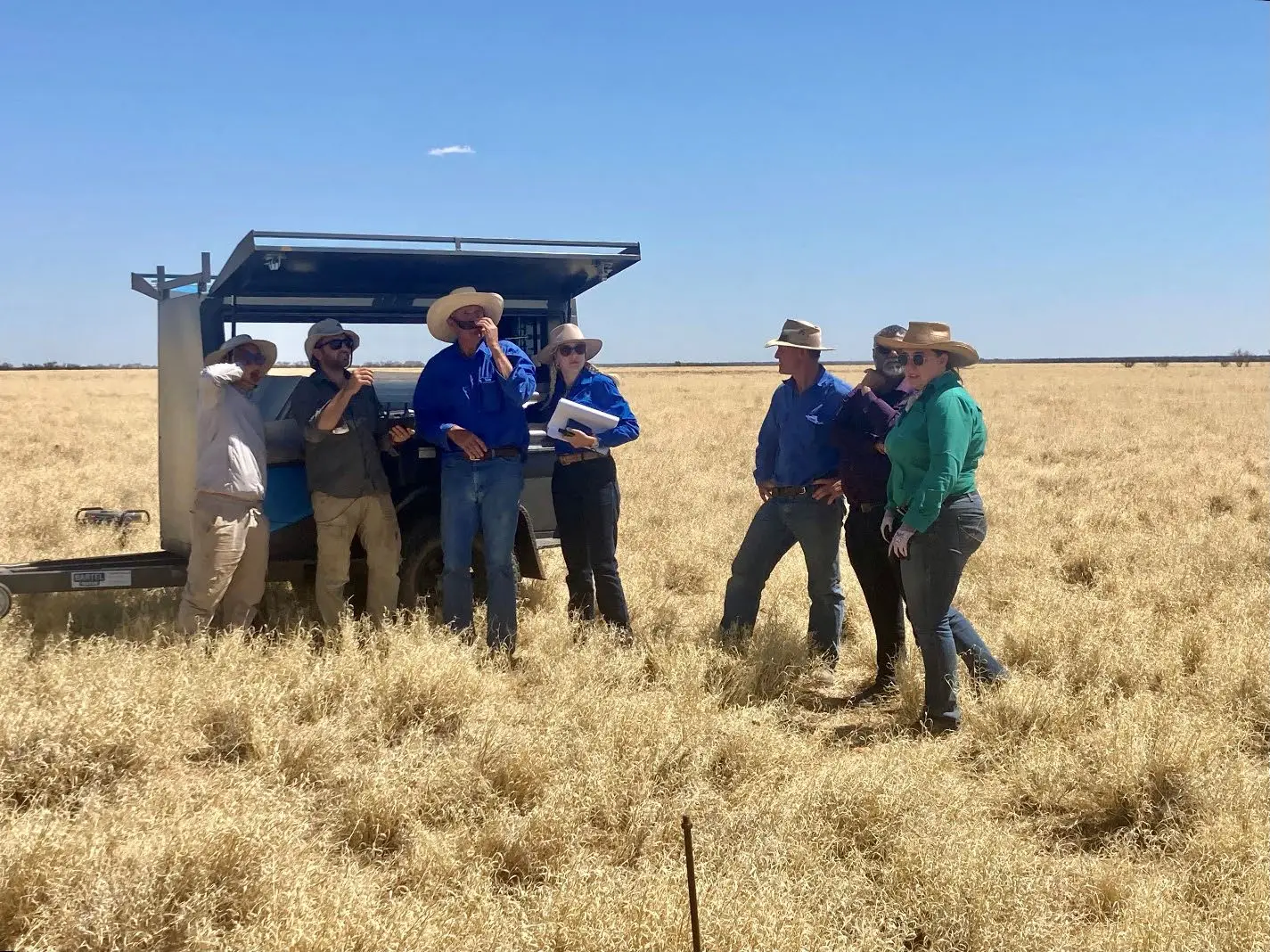
Video

Natural BalanceWatch on YouTube

Photos

Case study 2 · Grants

Enhancing soil health and climate resilience in the Northern Territory

Provider
University of Queensland
Investment
A$1 million

The soils of the Northern Territory are typically characterised by sandy surface layers overlying clay-rich subsoils. Low fertility and limited organic matter increase susceptibility to water erosion and constrain productivity.

The project is restoring soil function and stability by increasing organic matter across surface and subsoil layers through green manuring and delving to redistribute clay into upper soil horizons. These practices improve soil structure, enhance water infiltration and retention, and reduce erosion risk.

Delivery through farmer-led demonstrations, regional workshops, and tailored extension materials supports adoption of proven soil restoration practices and builds local capability to sustain outcomes.

20–30

years

Early results show a significant increase in biomass and soil organic carbon, indicating measurable progress in soil recovery. These improvements are expected to deliver long-term benefits, including increased soil stability, productivity, and resilience over 20 to 30 years.

RAIZ

About RAIZ

RAIZ is a global effort to map and mobilize funding for the restoration of degraded farmlands worldwide. It is hosted by the Ministry of Agriculture and Livestock of Brazil (MAPA) under the FAO FAST Partnership with the collaboration of the UNCCD G20 Global Land Initiative and the Food and Land Use Coalition (FOLU).

For more information: FAST-Partnership@fao.org

Explore more case studies

1 published

All case studies